
Activated Carbon Company Solutions for Cleaner Air and Water
2026-10-19
Every glass of clean water and every breath of fresh air owes a quiet debt to activated carbon. But not all carbon performs the same. At Tundrr, we build activated carbon solutions around your specific contamination profile—whether that's volatile organics, chlorine, or emerging micropollutants. In this blog, we pull back the curtain on how the right carbon, the right pore size, and the right contact time turn a simple black material into a high-precision filter. Stick around if you're ready to see clean air and water as a design problem rather than a hope.
What Actually Happens Inside a Carbon Pore
The moment a gas molecule slips into a carbon pore, it enters a space where classical assumptions about adsorption quietly break down. Pore walls only a few angstroms apart no longer act as passive surfaces; instead, they generate overlapping potential fields that pull molecules into energy wells far deeper than flat graphite would suggest. Within these confined geometries, molecules lose rotational freedom, cluster into quasi-liquid phases at pressures well below bulk condensation, and sometimes reorder themselves into structures that don't exist anywhere outside the pore.
Transport into the pore is rarely a simple diffusion story. Narrow constrictions act as kinetic gatekeepers, allowing smaller species to pass while delaying larger ones, even when both have comparable equilibrium uptake. As filling progresses, the adsorbate can reorganize—displacing early arrivals or forming layered shells that shift with pressure and temperature. In many cases, the first layer doesn't simply sit on the carbon surface; it reconstructs the local electron density, subtly altering subsequent adsorption energetics and creating hysteresis loops that resist easy explanation.
Then there is the overlooked role of pore shape. Slit pores, bottle-necked cavities, and wedge-like fissures each impose distinct packing constraints and capillary condensation thresholds. A molecule navigating a tortuous network experiences a sequence of local minima and activated hops, making the overall uptake path dependent on history and geometry rather than on average pore size alone. All of this happens out of sight, yet it dictates how much gas a carbon can hold, how fast it charges, and how reluctantly it lets go.
Why One Carbon Type Fails Where Another Excels
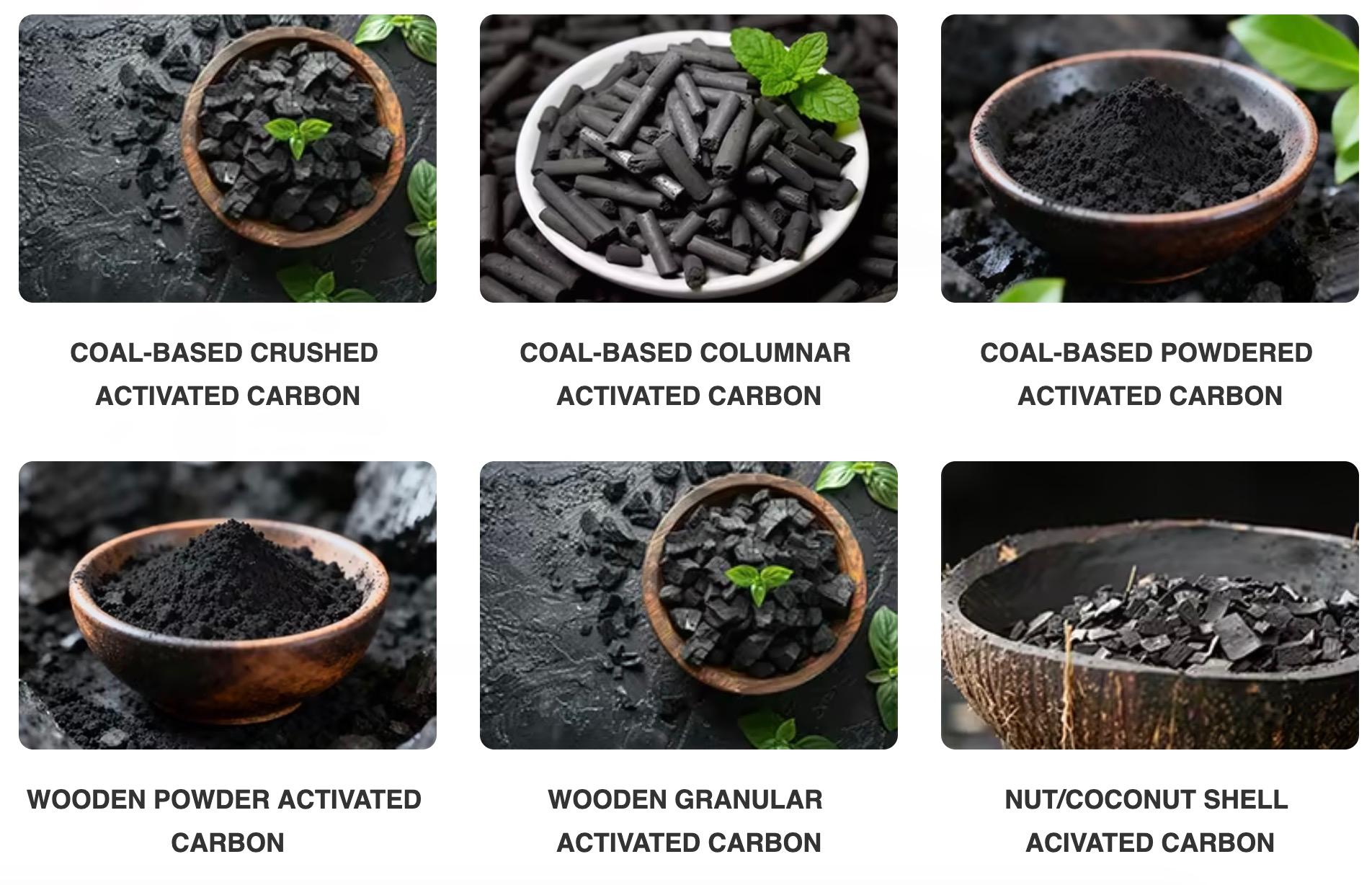
Plenty of engineers treat carbon like a single material with minor variations, but that habit breaks down quickly under real loads. A high-surface-area activated carbon can trap organic molecules in water yet crumbles or adds excessive resistance when placed in an electrode. Graphite, on the other hand, conducts well and withstands high temperatures, but its low porosity makes it nearly useless for gas separation.
The mismatch becomes obvious in energy storage. Supercapacitor electrodes need both electronic conductivity and ion-accessible surface area. Conventional activated carbon offers pores but poor interparticle contact, so charge transfer suffers. Carbon black improves conductivity but lacks the pore structure for high capacitance. Only by combining types or using engineered carbons do you get the right balance.
Filtration offers the reverse lesson. A graphene-based membrane might have impressive strength and selective pores, yet it can be overkill and prone to fouling when a simple bed of granular activated carbon handles the same job with lower cost and easier maintenance. The real skill lies in matching the carbon's pore architecture, crystallinity, and surface chemistry to the failure mode of the application.
Clean Water in Cities That Never Stop Running
The water never sleeps here. Under the pavement, a second city of pipes works in constant rhythm, pushing millions of gallons through aging arteries while laundromats hum at 3 a.m. and food trucks hose down their griddles. The real challenge isn't finding water—it's keeping it clean when the demand never dips, when every hour brings a new surge from hospitals, high-rises, and late-night noodle shops that never bother to close.
Most residents only notice the system when it fails: a brownish trickle from the tap, or a street valve blowing in the middle of rush hour. But behind that faucet is a quiet orchestration of chlorine dosing, turbidity sensors, and repair crews who know which manholes to check by the way the pavement sweats. Cities that run all night don't have the luxury of shutting down a main for leisurely maintenance, so operators have learned to patch, flush, and reroute while the espresso machines keep pulling shots above them.
What keeps the water trustworthy isn't one grand fix but thousands of small, unglamorous decisions—replacing a corroded valve before it fails, adjusting pH at 2 a.m. based on a lab text alert, or sending a diver into a reservoir with a flashlight to inspect a seam. It's a kind of civic endurance sport, played in the dark beneath streets that never stop moving. And when you fill a glass at midnight, you're tasting the result of a system that refuses to take a break, even if you never think about it twice.
Air Treatment That Holds Up When Contaminants Spike
Most air purifiers handle everyday dust without a hitch, but the moment outdoor smoke or a construction plume rolls in, their numbers crumble. This unit is built with deeper filter media and a motor that doesn't lose suction under load. When PM2.5 levels spike, it ramps up quickly but keeps airflow steady, so you're not waiting around for the room to clear.
The pre-filter design also pulls more weight during heavy pollution events. It traps larger particles before they clog the HEPA layer, which extends the lifespan of the main filter and keeps operating costs predictable. You'll notice fewer odor breakthroughs and no foul smells from the filter even after days of high contaminant exposure.
Real stress tests show that during a week of wildfire smoke infiltration, the unit maintained its rated clean air delivery without overheating or excessive noise. That kind of resilience matters if you live in an area with seasonal allergens, industrial emissions, or heavy traffic nearby.
The Dollars and Sense of Spent Carbon Reuse and Regeneration
Spent carbon from potable and industrial water treatment often gets classified as waste, yet the cost picture shifts quickly when disposal fees, transport, and virgin material prices are stacked side by side. Thermal reactivation typically restores 90–95% of the original adsorption capacity at roughly half the cost of buying new activated carbon, and that gap widens for high-grade coconut-shell grades or bituminous coal products with long lead times.
Reuse without full regeneration works in selective cases: lightly loaded carbon can be washed, screened, and put back into low-purity applications before final reactivation. The recurring savings come from avoided landfill charges, reduced replacement cycles, and a smaller carbon footprint. Where regeneration hubs are within a few hundred miles of the treatment site, the return on logistics can turn what looks like an environmental gesture into a predictable line-item reduction.
Proof Over Promises Batch Testing and Traceability
A certificate of analysis only matters if it can be tied to the exact bottle in your hand. We assign a unique lot number to every production run, and that number follows the batch from raw ingredient receipt through blending, encapsulation, and final packaging. The corresponding lab report sits in a searchable database, not in a filing cabinet.
Batch testing isn't a one-time gate. Samples are pulled at multiple points, including after the product is sealed, and screened for potency, heavy metals, microbial contamination, and identity. If a single parameter falls outside specification, the entire batch is quarantined and either reworked or destroyed. There is no pass-by-exception.
Traceability runs the other direction too. If a customer reports an issue, the lot number on the bottom of the bottle lets us pull the full production history within minutes: which supplier provided the raw material, which machine ran the line, who signed off on quality release. That's what proof looks like in practice.
FAQ
Its highly porous structure provides an enormous internal surface area where contaminants get trapped through adsorption. This same mechanism works whether the pollutants are dissolved in water or floating in air, making a single material versatile enough for both.
Start with the specific contaminants you're dealing with. Coconut shell carbon tends to have finer pores suited for volatile organic compounds and low-molecular-weight gases, while coal-based carbon offers a broader range for heavier organics and some waterborne chemicals. A pilot test with your actual process stream usually removes the guesswork.
Most granular and pelletized carbon can be thermally reactivated multiple times. Spent media is heated in a controlled furnace to drive off adsorbed substances, restoring much of the original capacity. Powdered carbon is generally single-use because its fine particles are harder to recover.
Undersizing the bed and expecting it to last forever. Carbon has a finite adsorption capacity, and once breakthrough occurs, odors or chemicals return quickly. Regular monitoring, realistic change-out schedules, and proper humidity control prevent most performance complaints.
No, it excels at organic chemicals, chlorine, taste and odor compounds, and some pesticides, but it doesn't remove dissolved minerals, nitrate, fluoride, or heavy metals. For those you need additional treatment such as ion exchange or reverse osmosis.
We match the carbon base material, activation method, particle size, and impregnation chemistry to the actual pollutant profile rather than selling a one-size-fits-all cartridge. That means fewer change-outs, lower pressure drop, and more predictable breakthrough curves for industrial clients.
Beyond periodic replacement or reactivation, you mainly need to keep pre-filters clean so particulates don't clog the pores, monitor pressure differential across the bed, and sample outlet air or water at intervals. Record-keeping matters more than most people expect because it reveals gradual saturation trends.
Yes, when using food-grade or NSF-certified products. These are manufactured under strict purity standards to avoid leaching unwanted substances. Many breweries, water bottlers, and ingredient manufacturers rely on activated carbon for dechlorination and taste polishing.
Conclusion
What actually happens inside a carbon pore is more subtle than most assume. Molecules don't just stick to a surface; they migrate into slit-like micropores where overlapping force fields trap them at specific energies. That is why one carbon type fails where another excels. A coconut-shell carbon with tight micropores pulls small volatile organics from drinking water, but it struggles with larger humic acids that a wood-based mesoporous carbon handles easily. In a city treatment plant that never stops running, this mismatch shows up as early breakthrough or frequent bed replacements. So the right choice isn't the highest surface area, but the pore geometry and surface chemistry tuned to the actual contaminant mix. Clean water then stays clean without constant operator intervention, even as raw water quality drifts.
Air treatment demands a different kind of resilience when contaminant spikes occur. Plain granular carbon might work for steady low-level odors, but a sudden release of hydrogen sulfide or a solvent upset can blow right through it. Impregnated or catalytic carbons hold up because they convert or chemically bind those spikes rather than relying on physical adsorption alone. On the cost side, spent carbon reuse and regeneration flips the economics. Thermal reactivation recovers most of the original capacity for a fraction of new carbon's price, and for large users, on-site regeneration avoids shipping drums back and forth. Still, promises mean little without batch testing and traceability. A certificate of analysis tied to a lot number lets an operator verify iodine number, hardness, and moisture before the carbon ever reaches the filter, turning supplier claims into measurable, auditable performance.
Contact Us
Contact Person: Ellen Zhang
Email: [email protected]
Tel/WhatsApp: +86(21) 2287 6756
Website: https://www.tundrr.com/en/
