
China Air Slip Ring Innovations for Seamless Rotating Connectivity
2026-10-09
Rotating equipment has always had a weak spot: how to deliver air, power, and data across a spinning interface without leaks, drag, or downtime. That's where China's latest air slip ring breakthroughs come in—and one name keeps surfacing in field reports: MOFLON. Their sealed rotary unions don't just reduce friction; they make it feel like the rotation isn't even there. Curious how a component smaller than a coffee mug can carry clean compressed air and 360° freedom at the same time? You're about to find out.
China’s Air Slip Ring Breakthroughs for Rotating Motion
For years, the demanding requirements of high-speed rotating platforms—from wind turbines to medical CT scanners—pushed engineers toward fiber optic rotary joints or liquid metal contacts, often at punishing cost and complexity. Chinese manufacturers have quietly rewritten that equation with a new generation of air slip rings that use precision-machined pneumatic channels instead of traditional brush contacts. These units maintain a stable compressed air or vacuum supply across a rotating interface without leaks, even at sustained speeds above 2,000 rpm. What sets recent domestic designs apart is not just the sealing technology, but the integration of multiple independent air passages within a single compact housing, allowing simultaneous control of cooling, clamping, and actuation through one rotary joint.
A key breakthrough in the past two years has been the move from single-lip seals to hybrid labyrinth and carbon-faced seal stacks, which tolerate abrasive particulates and temperature swings from -40°C to 120°C without performance drift. In wind turbine pitch control systems, this has extended service intervals from six months to over three years, while reducing leakage losses to below 0.5% of line pressure—figures that were previously the exclusive domain of European suppliers. At the same time, several provincial research institutes have refined a micro-groove surface treatment on the rotor journals, creating a hydrodynamic film that lifts the seal during rotation but maintains a tight static seal when stationary. That dual-mode behavior eliminates the “morning sickness” problem common in cold climate installations.
Beyond renewable energy, the same air slip ring architecture is being adapted for semiconductor wafer handling robots and high-end packaging machinery. Instead of routing electrical signals and pneumatic lines separately, new models incorporate a centralized hollow shaft for optical fibers or wiring, surrounded by annular air galleries. One Shenzhen-based team recently demonstrated a 12-channel version with a total leak rate of just 3 cc/min at 8 bar, tested over 10 million continuous revolutions without seal replacement. This level of reliability, combined with a per-unit cost roughly 40% lower than comparable imports, is reshaping procurement decisions across Asia’s automation sector. The practical effect is quieter, cleaner, and more predictable rotating motion—without the fear of electrical arcing or brush dust that has long plagued conventional slip ring designs.
Seal Design Secrets for Leak-Free Rotary Unions
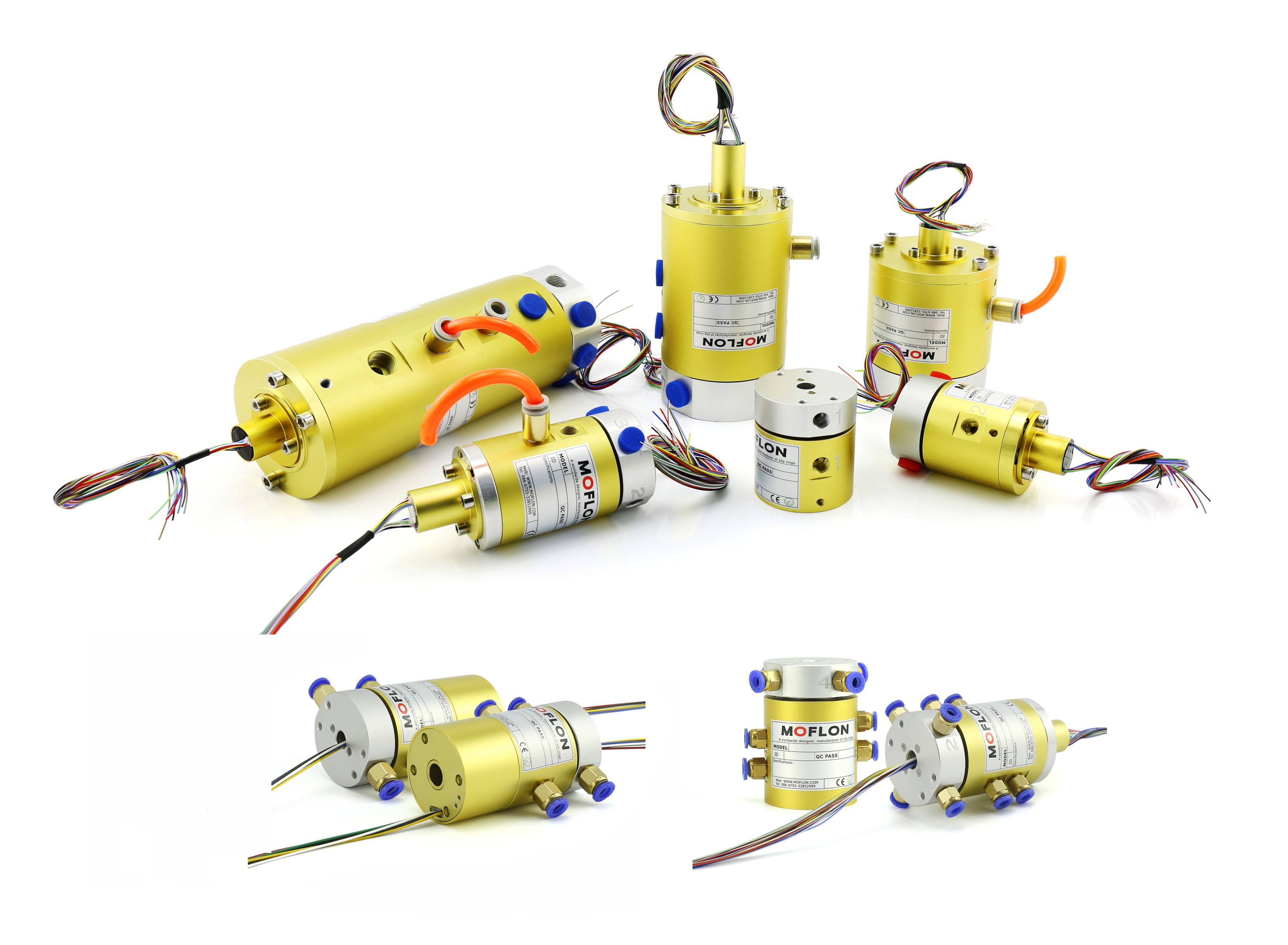
Rotary unions often fail not because of the rotating parts, but because the seal never stood a chance against the micro-movements and pressure spikes that the catalog never mentions. A leak-free design starts with choosing a seal profile that can breathe: a slight axial float or a preloaded lip that follows the shaft without sticking. Too much interference and you get heat fade; too little and you get weepage at low speed. The secret is to map the actual runout and axial play of your application before selecting the groove dimensions, not after.
Another overlooked detail is the balance between sealing force and lubrication. Many rotary unions run dry at the seal face for the first few seconds after start-up, which is when damage occurs. A well-designed housing includes a micro-reservoir or a spiral groove that pulls a thin film of the process fluid back to the sealing line, even if the fluid is water or a light oil. This self-wetting action isn't about adding more seals—it's about giving the primary seal a fighting chance during those harsh transition moments.
Finally, the material pair matters more than the fancy branding on the seal. A carbon-graphite face against a hardened counterface works well for high-temperature steam, but a PTFE-based lip with a stainless steel energizer spring will outperform it in low-viscosity chemicals where sticking is the real enemy. The trick is to match the wear couple to the duty cycle, not to the headline maximum pressure. When you get that right, the same basic union design can run leak-free for years instead of months.
Material Choices That Extend Air Slip Ring Life
The lifespan of an air slip ring often hinges on material selection, particularly where rotating and stationary components meet. Conductive rings made from hardened copper alloys with a fine grain structure resist wear and pitting far better than standard copper, while brush contacts benefit from composite materials blending silver, graphite, and molybdenum disulfide to reduce friction and electrical noise. Pairing these with a hard-anodized aluminum housing not only sheds heat more efficiently but also protects internal surfaces from oxidation, which is a common silent killer in compressed-air environments.
Beyond the contact pair, elastomer seals and bearing greases must be chosen for compatibility with both air flow and thermal cycling. Fluorosilicone O-rings outperform nitrile in low-humidity air streams, maintaining flexibility without cracking over thousands of rotations. Likewise, a perfluoropolyether-based grease keeps its viscosity across wide temperature swings, preventing the dry spots that accelerate raceway wear. Even the choice of insulating spacers matters: ceramic-filled PEEK avoids the micro-debris shedding seen in cheaper thermoplastics, keeping air channels cleaner and reducing the chance of abrasive particles reaching the contact zone.
Field data from rotary indexing tables shows that switching from brass rings to dispersion-strengthened copper extends service intervals by nearly 40%, while graphite-silver brushes cut voltage ripple in half under continuous 24/7 operation. The key is not chasing a single miracle material but designing a matched set—ring hardness slightly above brush hardness, seal durometer matched to operating pressure, and lubricant evaporation rate low enough to survive years without replenishment. Such deliberate pairing turns material choice from a cost variable into the primary lever for extending air slip ring life.
Compact Pneumatic Rotary Joints for Tight Spaces
When equipment layouts shrink to the size of a suitcase, every millimeter of a rotary joint matters. Standard pneumatic swivels often force designers to sacrifice airflow capacity or routing flexibility, but compact rotary joints take a different path. Their slim bodies and integrated air channels fit neatly between moving arms, index tables, and cramped machine frames without adding bulk to the assembly.
Inside these joints, multiple independent air passages run through a common axis, allowing simultaneous supply of vacuum, blow-off, or actuation pressure from a single rotating interface. Low-friction seals and precision-machined bearing surfaces keep leakage minimal even at higher cycling speeds. Some models use anodized aluminum housings and hardened steel shafts to reduce weight while maintaining stiffness under repeated off-axis loads.
Typical installations include rotary pick-and-place heads on packaging lines, compact robotic wrists, and small indexing fixtures where a traditional swivel would collide with adjacent tooling. By shortening the overall stack height and moving the air connections to the side or rear, these joints free up valuable clearance for sensors, cable carriers, and other hardware. That extra space often makes the difference between a feasible design and one that requires a larger, heavier frame.
How Air Slip Rings Handle Extreme Speed and Pressure
Air slip rings are engineered to perform reliably under conditions that would quickly degrade conventional contact-based systems. Instead of relying on physical brushes that wear down and generate heat, these units use a thin film of compressed air to transfer signals and power across a rotating interface. This non-contact approach eliminates mechanical friction, allowing the assembly to sustain rotational speeds far beyond what metal-on-metal contacts can endure. The air gap also serves as a natural buffer against radial and axial loads, so the internal components remain stable even when the system experiences sudden pressure spikes or centrifugal forces.
At extreme velocities, the challenge isn't just wear but also the integrity of the transmission path. Air slip rings address this by maintaining a consistent, calibrated air cushion that dampens vibration and prevents arcing or signal loss. Because the rotating and stationary parts never touch, there's no debris generation, which is critical in high-precision applications like turbine testing rigs or high-speed packaging lines. The compressed air supply is regulated to match the operating RPM, ensuring the gap remains stable whether the shaft is spinning at a few hundred or several thousand revolutions per minute.
Pressure tolerance is equally important. The housing and internal channels are designed to handle elevated ambient pressures without deformation, and the air delivery system can be tuned to compensate for external loads. In deep-sea or high-altitude environments, where pressure differentials can compromise seals, air slip rings use positive internal pressure to keep contaminants out while allowing continuous rotation. This dual capability—sustaining high speed and resisting pressure extremes—makes them a robust alternative when traditional slip rings would fail within hours.
Real-World Applications Driving Air Slip Ring Innovation in China
In wind turbine pitch systems across Inner Mongolia and offshore Jiangsu, air slip rings face relentless salt spray, temperature swings from -30°C to 50°C, and constant rotation. Engineers have moved away from brass-on-graphite contacts to ceramic-coated rotors paired with reinforced polymer stators, cutting maintenance intervals from six months to over two years. One manufacturer in Ningbo recently field-tested a dual-channel design that supplies compressed air for blade de-icing while simultaneously handling four 30-amp power circuits, shrinking the nacelle footprint by a third.
The dense packaging and assembly lines of the Pearl River Delta demand rotary unions that can keep up with 300 cycles per minute on bottling and filling machines. A Shenzhen-based team redesigned the internal air passages from stacked O-ring seals to a floating graphite face seal, reducing leakage enough to cut compressed air costs by 18% on a single line. Field data from a beverage plant in Foshan showed the new units tolerated frequent stop-start operations without the usual pressure spikes that damaged downstream valves.
Medical CT gantries and robotic surgical arms in China's expanding hospital network present a different challenge: near-silent rotation and zero particulate shedding. Air slip rings used for cooling detectors or powering pneumatic clamps now incorporate labyrinth seals with filtered purge ports. A supplier in Suzhou partnered with a Shanghai hospital to validate a ring that maintains 0.02 mm axial runout at 120 RPM, meeting cleanroom class 5 standards while reducing audible noise from 62 dB to 44 dB.
FAQ
Older rotary unions often rely on simple O-ring seals that degrade quickly under continuous rotation or pressure spikes. Chinese manufacturers have moved toward multi-stage labyrinth seals combined with ceramic-coated wear surfaces. This approach cuts leakage by keeping the sealing interface stable even at higher speeds, and it extends service intervals in ways traditional designs struggle to match.
High-speed rotation usually causes seal chatter and heat buildup. Recent designs from Chinese suppliers address this by using balanced mechanical seals and precision-machined bearing assemblies. The result is less friction, lower operating temperature, and stable air pressure delivery without the pulsation that can disrupt downstream pneumatic tools or sensors.
Packaging machinery, rotary indexing tables, semiconductor handling robots, and wind turbine pitch control systems are common adopters. In each case, the equipment needs continuous air supply or vacuum while rotating, and any interruption or pressure drop causes downtime. Air slip rings let these systems maintain a clean, uninterrupted media path.
Yes. Many Chinese innovations now integrate pneumatic channels with electrical slip ring circuits inside a single housing. This hybrid design removes the need for separate rotary unions and cable reels, which simplifies machine layout and reduces points of failure. Users often combine compressed air for actuation with Ethernet or sensor signals through the same rotating interface.
Look for models with stainless steel housings, FDA-compliant seal materials, and no exposed lubricants. Some Chinese manufacturers offer washdown-ready designs with mirror-polished surfaces that prevent particle accumulation. Also check whether the unit allows easy purging of internal air channels, as that helps maintain hygiene between production batches.
Modular units let you add or swap pneumatic passages, electrical circuits, or fiber optic channels without redesigning the entire rotating assembly. Chinese suppliers often provide configurable through-bores and flange patterns that match common gearbox or motor mounts. This means a custom-like solution can be assembled from standard modules, cutting lead times from months to weeks.
Keep the air supply filtered and dry; moisture and particulates are the main causes of seal wear. Schedule regular pressure-drop checks to catch early leakage. For units with accessible seal cartridges, replace only the cartridge rather than the whole assembly. Many newer designs include wear indicators or test ports, so maintenance can be planned before failure occurs.
Conclusion
Across China's engineering landscape, air slip rings have evolved from simple rotary couplings into precision devices that unlock continuous pneumatic flow in rotating machinery. Breakthroughs in seal geometry—such as spring-loaded polymer lips and micro-grooved contact faces—now prevent leakage even as joints spin at thousands of revolutions per minute. Material scientists pair hardened stainless steel rotors with low-friction, wear-resistant composites like carbon-filled PTFE, doubling service life under abrasive conditions. At the same time, compact pneumatic rotary joints with nested air passages squeeze multiple channels into diameters under 30 millimeters, letting designers route air through cramped robot arms and indexing tables without sacrificing flow rate.
These innovations are not just lab curiosities; they answer real demands from Chinese factories and equipment builders. High-speed packaging lines, wind turbine pitch controls, and CNC tool changers all rely on air slip rings that maintain stable pressure at 10,000 rpm or 20 bar. The newest designs integrate lightweight ceramic bearings and labyrinth venting to handle thermal expansion and condensation, keeping rotary unions leak-free for millions of cycles. By focusing on seal resilience, material endurance, and space efficiency, Chinese manufacturers have turned a niche component into a hidden driver of automation reliability—proving that seamless rotating connectivity is less about a single breakthrough than a quiet accumulation of practical, field-tested refinements.
Contact Us
Contact Person: Xiangpin Li
Email: [email protected]
Tel/WhatsApp: 86 186 1706 8578
Website: https://www.moflon.com