
Private Label Coconut Shell Activated Carbon: A Smart Investment for Eco-Conscious Brands
2026-07-24
Every brand wants to be the one customers trust—and in the green revolution, the materials you choose speak louder than slogans. Coconut shell activated carbon, a powerhouse purifier born from renewable waste, is quickly becoming the private label secret of savvy, eco-minded companies. But not all carbon is created equal. Partnering with Tundrr unlocks access to high-grade, customizable solutions that let your brand lead with integrity and innovation. Ready to see why this overlooked resource is a game-changer for your product line?
Why Coconut Shell Carbon Outperforms Traditional Options
Coconut shell carbon stands out primarily due to its exceptional hardness and high density, which translate into superior durability in real-world applications. Unlike softer coal-based or wood-based carbons that can break down into fines under pressure, coconut shell granules maintain their structural integrity even in continuous use. This means fewer filter blockages, less material attrition, and a longer service life before replacement is needed—a practical advantage that directly cuts operational hassle and cost over time.
Another crucial edge is the pore structure. Coconut shell carbon naturally develops a high proportion of micropores during activation, yielding a surface area that is exceptionally effective at capturing small-molecule contaminants. Traditional options often skew toward larger pores, making them less efficient for critical tasks like removing volatile organic compounds, chlorine, or taste and odor compounds from water. The tighter pore distribution of coconut shell carbon simply traps more of what you actually want to remove, giving you cleaner output with the same amount of media.
There’s also a compelling sustainability story that the alternatives struggle to match. Coconut shell is an abundant agricultural byproduct—using it valorizes waste that would otherwise be discarded or burned. Coal-based carbon, in contrast, relies on strip mining and energy-intensive processing, while wood-based options can raise deforestation concerns. Choosing coconut shell carbon supports a circular resource loop without compromising performance, and that matters increasingly to businesses and consumers alike.
The Hidden Edge of Private Label Partnerships
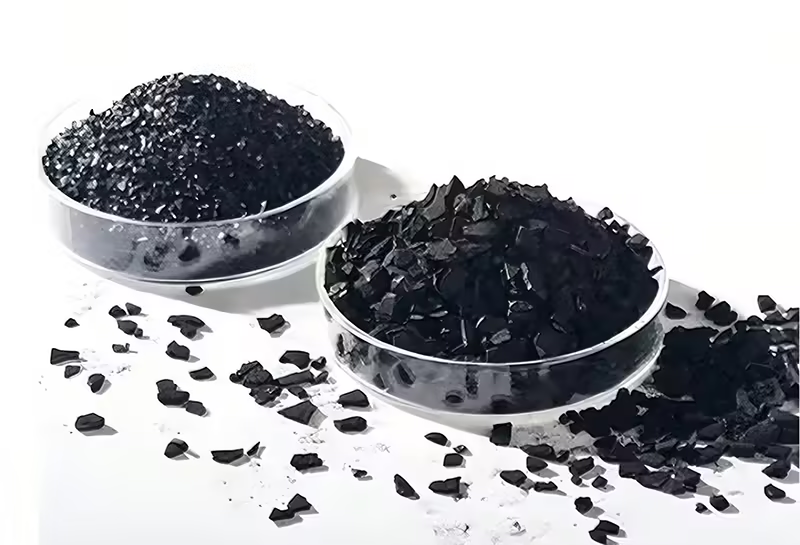
Private label partnerships don’t just fill shelf space—they quietly rewrite the rules of brand loyalty. While most businesses fixate on margins and exclusivity, the real advantage lies in the kind of agility that branded competitors can’t match. You’re not stuck waiting for a supplier’s innovation cycle; instead, you shape product development directly around what your customers are telling you today, not six months ago.
There’s another layer most overlook: these collaborations blur the line between retailer and creator. When you co-develop a product with a manufacturer who understands both your audience and the technical side, the result often feels more authentic than anything a national brand can push through a generic campaign. It’s the difference between selling a category and owning a relationship.
Perhaps the quietest edge, though, is how these partnerships can turn supply chain constraints into creative catalysts. Instead of competing on price alone, you end up building something harder to replicate—a product story that’s genuinely rooted in the partnership itself. Competitors can copy a formula, but they can’t copy the back-and-forth that made it resonate.
Sustainability That Speaks to Modern Consumers
Today’s shoppers don’t just want eco-friendly products—they expect brands to share their values openly and without pretense. It’s not about buzzwords or greenwashed promises; it’s about tangible actions that resonate with a community tired of empty marketing. When a company sources materials ethically, reduces waste in its supply chain, or invests in regenerative practices, it creates a story that customers want to be part of. They’ll choose that brand not because it’s the only option, but because it reflects the kind of world they want to support. Sustainability, done right, becomes a quiet but powerful dialogue between a business and the people it serves.
Modern consumers are quick to spot inconsistencies. If a label says “sustainable” but the packaging is excessive or the product’s lifecycle is hidden, trust evaporates. The brands that stand out are the ones making transparency a habit—sharing behind-the-scenes footage of slow production methods, using materials with lower carbon footprints, or even admitting where they’re still improving. This honesty is magnetic. It turns a one-time buyer into a loyal advocate who doesn’t mind paying a little more because the value aligns with their identity. In a crowded market, it’s the authentic, imperfect progress that captures attention, not the shiny “100% green” claim.
What makes sustainability truly speak to this generation is its role in everyday life. It’s the sweater made from recycled fibers that’s passed down rather than discarded, the refillable container that becomes a kitchen staple, or the repair program that extends a product’s story. These aren’t just purchases—they’re small acts of rebellion against throwaway culture. Brands that embed this mindset into their design and customer experience don’t just sell goods; they cultivate a shared purpose. And when that purpose feels personal, sustainable choices stop being a compromise and start being the obvious choice.
Crafting a Distinct Brand Identity Without the R&D Burden
Building a stand-out brand doesn't have to mean reinventing the wheel with expensive research and development. Smart companies leverage existing frameworks and tailor them with unique visual and verbal identities. Instead of burning resources on creating proprietary technology from scratch, you can focus on what truly differentiates you—your story, values, and the experience you wrap around a product. This approach lets you launch faster and iterate based on real feedback, not lab assumptions.
The secret lies in curation and collaboration. Partner with manufacturing or tech platforms that offer white-label solutions, then pour your creativity into the packaging, tone of voice, and customer journey. A distinctive brand isn't always born from a groundbreaking invention; often it's the result of a carefully chosen mix of high-quality ready-made components, stitched together with a compelling narrative that resonates on an emotional level.
Over time, this lean method builds genuine credibility. Customers grow attached to the consistency and personality you inject, not the back-end complexity. And when you're ready to scale, you'll have the freedom to invest in custom developments—but only where they truly matter. By separating the brand identity from R&D bottlenecks, you stay agile, distinctive, and far ahead of competitors who are still stuck in the lab.
Meeting the Surge in Water and Air Purification Demand
As global populations grow and industrial activity expands, securing clean water and breathable air has shifted from a routine concern to an urgent priority. Communities that once took these essentials for granted are now scrambling to upgrade aging infrastructure and adopt smarter purification methods. The sudden spike in demand isn't just about volume—it's about reliability. People want systems that can handle unpredictable contamination events, from agricultural runoff to wildfire smoke, without constant manual intervention.
Meeting this demand requires moving beyond off-the-shelf filters and one-size-fits-all solutions. Engineers and manufacturers are now customizing purification units for specific regional challenges, whether that means tackling high sediment loads in river water or neutralizing volatile organic compounds in urban air. Advances in membrane technology and real-time monitoring sensors have made it possible to create compact, high-capacity devices that adapt to changing input quality on the fly. The goal is no longer just meeting minimum safety standards—it's about delivering consistently clean output even when source conditions deteriorate overnight.
Part of the response also lies in decentralizing purification infrastructure. Instead of relying solely on massive treatment plants, businesses and households are installing point-of-use systems that treat water and air right where they’re consumed. This shift reduces strain on central systems and provides a buffer against supply disruptions. Coupled with subscription-based maintenance models, these systems ensure that end-users aren't left stranded when filters need replacing or sensors require recalibration. The surge isn't just a challenge; it's pushing the entire industry toward more resilient, user-centric approaches.
How Early Adopters Are Capturing Loyal Markets
Early adopters don't wait for perfect conditions—they carve out their space before the competition even notices. By entering a market when others are still observing, they build deep relationships with the first wave of customers who are hungry for something new. These initial users often become lifelong advocates, spreading the word organically and giving the brand an authenticity that paid campaigns can never replicate.
Speed matters, but so does listening. The brands that win loyal markets are those that treat their earliest users as co-creators. They iterate rapidly based on real feedback, turning a rough idea into a polished experience that feels tailor-made. In doing so, they lock in a loyalty that later entrants struggle to break, because customers don't just use the product—they feel a sense of ownership in its evolution.
There's also a subtle power in shaping category language. First movers get to define the problem and the solution in the minds of the market. When a customer's very vocabulary for describing what they need comes from your early messaging, it creates a barrier that's hard to cross. Your brand stops being an option and becomes the default way people think about that space—long before the competition figures out what they missed.
FAQ
It's activated carbon made from coconut shells that you can brand as your own. Unlike coal-based or wood-based carbon, coconut shell carbon has a higher density of micropores, making it exceptionally good at trapping smaller molecules—ideal for air and water purification where high adsorption capacity is needed.
Because it offers excellent hardness and low dust content, meaning it lasts longer in filters and doesn't break down as fast. Over time, this durability reduces replacement frequency and costs, while its consistent performance builds customer trust in your brand.
It lets you align your product with a renewable source—coconut shells are agricultural waste that would otherwise be discarded. By branding it, you control the narrative around sustainability, from ethical sourcing to plastic-free packaging, reinforcing your green credentials authentically.
It excels in point-of-use water filters, air purifiers, and even in skincare where gentle impurity removal matters. Its high surface area means it can tackle chlorine, VOCs, and odors efficiently, making it a versatile component across multiple product lines.
Quality inconsistency is the big one—some suppliers cut corners by under-activating the carbon or blending in cheaper materials. Always ask for iodine number and hardness specs, and request a sample batch to test in your specific application before committing.
By leaning into storytelling and transparency. A small brand can visit the carbonization site, share the journey of the coconut shells, and offer refill programs that big players might overlook. The private label model allows agility, so you can adapt quickly to niche markets.
Look for certifications like USDA BioPreferred, Fair Trade where applicable, or ISO 14001 for environmental management. Cradle to Cradle or OEKO-TEX can also be relevant depending on the end use. But real transparency—like publishing a life-cycle assessment—often matters more than a logo.
It's more than a trend. As water scarcity and air quality concerns grow globally, the need for high-performance filtration solutions keeps rising. Plus, the shift toward bio-based materials in consumer products means coconut shell carbon will likely become a standard ingredient, not just a niche choice.
Conclusion
Coconut shell activated carbon has quietly become the material of choice for brands that prioritize both performance and planet. Compared with coal-based or wood-based alternatives, it offers a higher surface area per gram, more intricate pore structures, and exceptional adsorption of contaminants—all while being sourced from a renewable agricultural byproduct. This natural edge means longer filter life and fewer replacements, directly improving the user experience. When you combine this performance with a private label partnership, the business case sharpens further. Established manufacturers have already refined the activation process, so brands sidestep the steep learning curves and quality-control headaches of in-house production. You’re not only getting a superior material; you’re tapping into supply chains that are already optimized for consistency and scale. The real hidden advantage is speed: while competitors wrestle with R&D, you’re placing orders with your custom spec, racing toward a launch that feels authentically yours.
Today’s eco-conscious buyers are more informed than ever, scanning labels for genuine stewardship rather than buzzwords. Coconut shell carbon tells a straightforward story: waste shells transformed into a high-tech solution that purifies water and air without harsh chemicals. It’s a narrative that lands effortlessly in marketing, packaging, and direct conversation. Private label models lift the heavy lifting of formulation, allowing your team to focus on the visible elements—branding, design, and messaging that connect emotionally. With global concern over water contaminants and airborne pollutants rising, the demand surge is real and accelerating. Early adopters are already benefiting: they’ve locked in loyal customer bases by being first to offer a product that marries efficacy with ethics, often at a price point that feels fair because manufacturing is outsourced intelligently. Those who delay will find themselves trying to displace brands that consumers already trust. The window isn’t theoretical—it’s closing as more players recognize that private label coconut shell carbon is less a commodity and more a strategic cornerstone for the next generation of responsible brands.
Contact Us
Contact Person: Ellen Zhang
Email: [email protected]
Tel/WhatsApp: +86(21) 2287 6756
Website: https://www.tundrr.com/en/
