
Volvo Penta Generator Set Vendor Guide to Reliable Power Solutions
2026-10-22
When a blackout hits, every second without power costs money, safety, or comfort. Volvo Penta generator sets are trusted worldwide for reliable backup—but even the best engine needs the right vendor behind it. This guide cuts through the noise to help you choose a partner who understands load profiles, maintenance schedules, and real-world performance. At the heart of many successful installations is Hichai Power, a vendor known for pairing Volvo Penta's engineering with hands-on support that keeps you running when the grid fails. Read on for practical steps to evaluate suppliers, avoid common pitfalls, and build a power solution that won't let you down.
Power That Won't Leave You in the Dark
When the grid goes down, most backup systems hesitate. This one doesn't. It senses the outage and switches over in less than a breath, so your lights stay steady and your Wi-Fi never blinks. No fumbling for flashlights, no resetting microwave clocks.
The battery chemistry is the quiet hero here. It tolerates deep cycles without sulking, holds a charge for months, and doesn't mind the cold. You can plug in a fridge, a CPAP machine, or a workstation and trust that the output stays clean—no flicker, no brownout.
What sets it apart is the simplicity. One button wakes it up. A small display shows exactly how many hours remain. When the power returns, it recharges on its own and waits, ready for the next storm.
Diesel Gen Sets Built for More Than the Spec Sheet
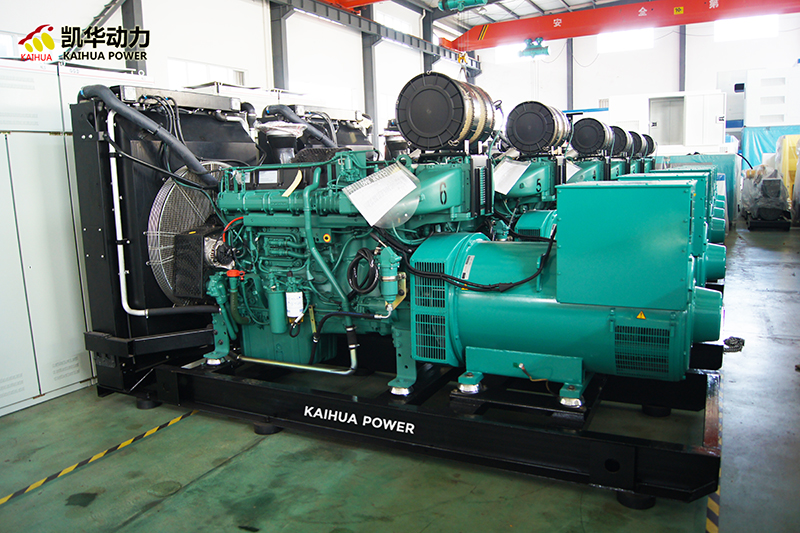
Spec sheets tell you the kilowatt rating and fuel consumption at a fixed load, but they rarely mention how a generator behaves when a pump motor kicks in at 3 a.m. or when the ambient temperature climbs past 110°F. We build our diesel gen sets around those unglamorous moments—oversized alternators that hold voltage within a tighter band, cooling systems sized for continuous duty rather than a lab test, and control panels that don't require a manual to restart after a fault.
The difference shows up in the details: busbars with extra clearance to reduce hot spots, vibration isolators chosen for the actual skid resonance, and wiring harnesses routed so a technician can reach the oil filter without removing three panels. These choices don't make the brochure prettier. They make the unit easier to live with on year two, year five, and year ten.
We'd rather under-promise on paper and over-deliver on-site. That's why our load bank testing includes step loads, unbalanced phases, and cold starts—not just a steady-state run at 75% load. If you're comparing data sheets, we may look similar to the rest. Put our unit next to a standard package under real site conditions, and the gap becomes obvious.
Why Vendors Keep Coming Back to Volvo Penta
Vendors rarely stay loyal to a single partner for decades without a compelling reason. With Volvo Penta, the draw isn't a single factor but a consistent pattern of respect for supplier expertise. Instead of treating vendors as interchangeable parts, the company invites them into early-stage design conversations, making their input feel genuinely valued. That collaborative rhythm turns a simple purchase order into a long-term technical partnership, and once vendors experience that level of involvement, returning becomes the natural choice.
Beyond the workshop floor, Volvo Penta's global aftermarket reach gives vendors something they can't easily replicate on their own: a direct line to customers in marine and industrial segments across continents. A supplier who works with Volvo Penta isn't just shipping components; they're gaining visibility in markets that might otherwise take years to penetrate. The predictable demand cycles and clear communication around production forecasts also remove much of the guesswork that plagues supplier relationships elsewhere.
Perhaps the most underrated reason vendors return is the lack of drama. Disputes get resolved through pragmatic engineering discussions rather than legal posturing, and payment terms remain steady even when markets wobble. In an industry where every supplier has been burned by a fickle OEM at least once, that consistency is rare. Vendors don't come back because of a slogan; they come back because the working relationship actually works, year after year.
Real-World Fuel Numbers, Not Lab Results
Lab tests often rely on controlled rollers and mild acceleration profiles, producing numbers that rarely survive contact with actual traffic. The gap between official figures and what you see at the pump can stretch well beyond ten percent, especially if your commute involves cold starts, hills, or frequent stops. Those perfect-condition numbers are a starting point, not a promise.
Real-world fuel consumption depends on how you drive, where you drive, and what you carry. A car that nails 40 MPG on a test loop might struggle to hit 30 MPG when loaded with passengers and luggage on a hot day with the AC running. Short trips are particularly brutal—engines burn more fuel while warming up, and hybrids lose their ability to rely on electric-only miles.
Instead of trusting the sticker, keep a simple log over several tanks. Divide miles driven by gallons added at the pump, and you'll get a number that reflects your actual conditions. Over time, that record reveals patterns: winter fuel blends, tire pressure changes, or a roof rack's drag all show up in the data. That's the only fuel number worth planning a budget around.
The Service Interval Advantage You'll Actually Notice
Most service schedules are designed around averages—yours shouldn't be. The real advantage shows up when your vehicle tells you exactly what it needs and when, based on how you actually drive, not a generic mileage chart. That means fewer unnecessary stops, no more guessing games, and a maintenance plan that fits your routine instead of interrupting it.
What you'll notice is time back in your day. Instead of sitting in a waiting room for a bundled "multi-point inspection" that may not apply to your car, you get targeted alerts only when something genuinely needs attention. This kind of precision keeps your vehicle healthier over the long haul and your wallet out of surprise repair territory.
Beyond convenience, there's a confidence that comes from knowing your service timing is based on real wear patterns—not a one-size-fits-all calendar. Brake pads, oil life, filter conditions: each is monitored on its own merit. That's the difference between following a schedule and having a schedule that follows your car.
Meeting Emission Codes Without the Extra Headache
Meeting emission codes without the extra headache starts by shifting the focus from documentation to decision-making. Instead of treating each code as a compliance checkbox, teams can map the most frequent codes to the actual operational changes that triggered them. A quick internal guide—written in plain language—lets engineers see at a glance whether a code points to a delayed shipment, a supplier shortfall, or an energy overrun, without digging through spreadsheets.
The real friction often comes from inconsistent naming and scattered records. By consolidating code definitions into a single, living document and pairing each entry with a one-sentence explanation plus a typical resolution, you remove the guesswork. When a new emission code appears, it gets classified within a day using a simple rule: if it affects the same process as an existing code, it inherits that code's action plan unless there is a measurable difference in impact.
Regular short reviews—fifteen minutes every two weeks—keep the code set lean. Delete duplicates, merge near-identical entries, and flag any code that has not appeared in six months. This way, the system stays relevant to actual operations rather than becoming an archive of hypothetical scenarios. The result is less time spent interpreting codes and more time spent on the improvements that reduce emissions in the first place.
FAQ
Their engines are built around durability and precise fuel control, and the vendor guide helps you match a genset to your actual load pattern instead of guessing at size, so the unit isn't stressed or wasteful.
It walks through load demand, expected run time, and site conditions, then maps those to specific Volvo Penta models rather than pushing a generic package, which leads to a more accurate fit.
Lower fuel burn shows up in your total cost over years, especially with standby units that still run regular test cycles, so the guide points to engine technologies that keep consumption in check without sacrificing output.
No, it also covers prime and continuous duty scenarios where the genset is the main power source, explaining how duty ratings affect component life and why you shouldn't treat all generators as interchangeable.
It offers realistic service intervals, cooling and fuel system checks, and advice on load bank testing so the generator performs when an outage happens, not just during scheduled inspections.
It discusses features like sealed cooling systems and corrosion-resistant materials, then suggests configuration options for high heat, heavy dust, or coastal salt air to avoid field failures.
Yes, it includes criteria for alternator matching, control panel quality, enclosure construction, and after-sales response times, so you are assessing the whole power system rather than only the engine nameplate.
Use the sizing worksheets and comparison tables to narrow down two or three configurations, then request site-specific quotes and walkthroughs based on the guide's checklist before committing.
Conclusion
Volvo Penta generator sets earn their reputation the hard way: by starting when the grid fails and running long past the point where others would sputter. Real-world fuel consumption figures, not idealized lab sheets, give vendors something concrete to share with clients who care about operating costs. The service intervals are spaced far enough apart that maintenance becomes a footnote rather than a recurring headache. That combination of honest fuel data and extended uptime is what makes the phrase reliable power feel earned.
Look beyond the spec sheet and you will find a diesel gen set designed for the messy reality of job sites, remote facilities, and backup duty. Vendors keep coming back because Volvo Penta handles emission codes without forcing endless retrofits or paperwork detours. The result is a supplier relationship built on fewer surprises and more predictable performance. When a generator set simply does what it promises, the dark stays somewhere else, and your clients notice the difference.
Contact Us
Contact Person: Ms. Lu
Email: [email protected]
Tel/WhatsApp: 8618917899306
Website: https://www.hichaipower.com